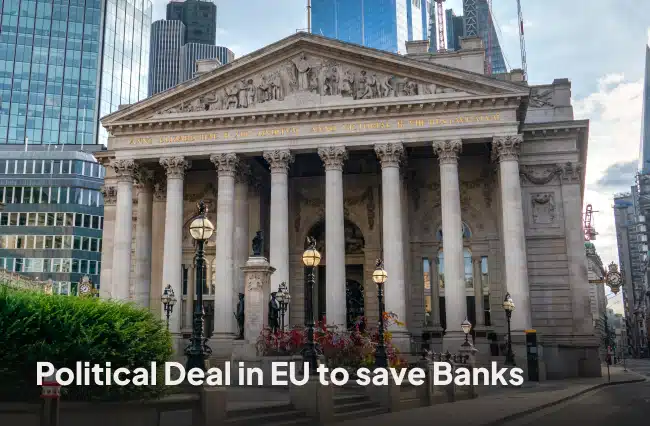

Since 2008, European taxpayers have given €1,600 billion in support of the banks during the financial crisis. The European Parliament is now in the process of agreeing a deal between EU member states and deciding upon final bailout conditions, integrating finances, and establishing a central authority.
This central authority will have the power to shut down banks in the Eurozone. The finalised bailout criteria are a precondition after which failing banks will receive money directly from the common Eurozone rescue funds.
This political agreement aims to prevent collapsing banks from affecting weak economies any further. By shutting down banks that are too far gone to be rescued and propping up banks that have potential to recover, the EU financial situation will be greatly improved.
Banks within the Eurozone will be regulated by the European Central Bank from 2014. Germany’s finance minister, Wolfgang Schäuble, made it clear that the changes being made put shareholders and creditors “liable first and foremost”.
Dubbed the “bail-in”, the political agreement will be able to force contributions to failing banks from shareholders and bondholders, as well as some depositors. This will come into effect from 2018. Small companies and uninsured deposits of individuals are given certain advantages with regard to this, and insured deposits below €100,000 are exempt from mandatory contributions.
Expand Your Business with Us
The EU’s political deal on failed banks represents a major milestone in strengthening financial stability across the Eurozone. By creating a central authority with powers to restructure or shut down failing banks, Europe is taking decisive steps to safeguard economies and protect investors. The introduction of “bail-in” rules from 2018, which prioritize shareholder and creditor responsibility before taxpayers, further reinforces the commitment to financial discipline and transparency. For businesses, this creates a more predictable environment in which risk is shared more fairly, ensuring that the banking system becomes more resilient to future crises.
Despite stricter banking regulations, opportunities for international businesses remain abundant in Europe. Investors can continue to rely on a robust financial system, an integrated single market, and improved oversight from the European Central Bank. This environment reduces uncertainty and creates safer conditions for growth, innovation, and cross-border expansion.
At Open A European Company, we help investors and entrepreneurs make the most of Europe’s evolving financial landscape. Whether you need support with opening a Euro bank account, structuring your company for tax efficiency, or ensuring compliance with EU regulations, our experts provide end-to-end solutions.
Secure your business future in Europe partner with us today and expand confidently in one of the world’s strongest financial markets