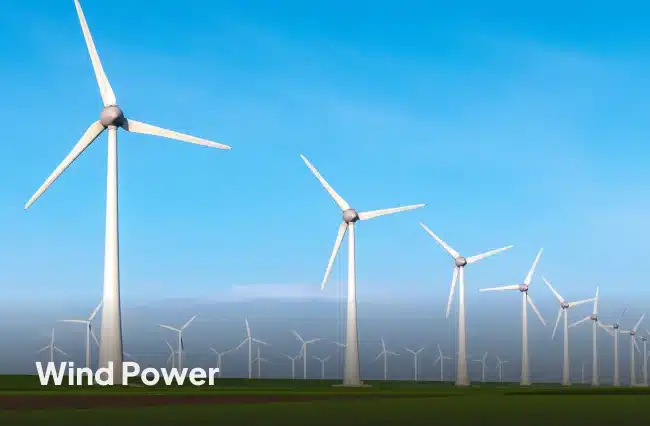
An independent report on the economics of renewable energy has found that installing more wind turbines across the UK would make the country’s energy markets less vulnerable to global fossil fuel price shocks.
The study, published by Cambridge Econometrics for RenewableUK, suggests that wind energy could provide long-term economic stability, reduce fossil fuel imports, and boost resilience in the face of volatile global markets.
Rising Dependence on Imported Energy
With dwindling oil and gas reserves in the North Sea, Britain is increasingly reliant on imports to meet its energy needs. This dependence exposes the economy to global price fluctuations, geopolitical risks, and supply chain disruptions.
In 2013, the UK’s existing wind turbines already saved the nation £579 million in fossil fuel costs, according to the report. By expanding investment in wind power, Britain could multiply these savings while reducing its exposure to unpredictable foreign markets.
(Source: UK Department for Energy Security & Net Zero)
The Case for Wind Power
The UK has some of the best wind resources in Europe, particularly offshore. Harnessing this natural advantage could make the economy more resilient.
Report co-author Sophie Billington noted:
“One of the main messages from this report is that in a scenario with a higher content of wind energy, you are less reliant on fossil fuels. For the wind scenario, you have higher upfront capital costs but fewer uncertain variable costs, leading to more price resilience.”
In other words, while building wind farms requires significant investment upfront, their operating costs are stable and predictable compared to fossil fuels, whose prices are notoriously volatile.
Climate Change Commitments
The UK became the first country to pass a legally binding climate change target in 2008, requiring greenhouse gas emissions to be cut by at least 80% from 1990 levels by 2050.
Yet progress has been slow. Rob Norris, head of communications at RenewableUK, said:
“The crucial thing is that energy policy is a long-term game and at the moment we only really know what the government support will be out to 2020. What you really need is a long-term vision out to 2030 so then you can plan, especially when it comes to large offshore developments.”
A clear, long-term strategy is vital to give investors confidence and to achieve economies of scale in renewable deployment.
Benefits of Expanding Wind Power
1. Price Stability
-
Wind energy reduces reliance on imported fossil fuels, insulating the economy from international price shocks.
-
Predictable operating costs make it easier for businesses and households to plan long-term.
2. Job Creation
-
The UK’s offshore wind industry already supports tens of thousands of jobs, from construction to maintenance.
-
Expanding capacity would stimulate further employment in coastal communities.
3. Energy Security
-
Domestic wind energy reduces exposure to volatile global markets.
-
It strengthens the UK’s independence from politically unstable energy suppliers.
4. Environmental Benefits
-
Increased wind power directly contributes to cutting carbon emissions.
-
Helps the UK move toward its 2050 net zero goals.
(Source: International Energy Agency)
The Offshore Advantage
Britain is home to some of the largest offshore wind farms in the world, including:
-
Hornsea One & Two (Yorkshire coast).
-
London Array (Thames Estuary).
-
Beatrice (Scotland).
Offshore projects benefit from stronger and more consistent wind speeds compared to onshore. According to RenewableUK, the UK’s offshore wind capacity is expected to quadruple by 2030, making it the backbone of the nation’s renewable strategy.
Challenges and Considerations
While the potential is enormous, several challenges remain:
-
Upfront capital costs: Building offshore wind farms requires billions in investment.
-
Grid infrastructure: The UK must modernise its grid to handle intermittent renewable generation.
-
Policy clarity: Investors need long-term commitments from the government to provide certainty.
-
Public acceptance: Onshore wind farms often face local opposition, though offshore projects are generally more accepted.
What This Means for Businesses
The expansion of wind power in the UK creates opportunities for:
-
Engineering and construction firms working on infrastructure projects.
-
Technology providers in areas like turbine innovation, grid management, and energy storage.
-
Investors seeking long-term returns from renewable projects.
-
SMEs and startups providing services to support the green supply chain.
Expanding into the UK Energy Market
For international businesses, the UK’s renewable push makes it one of the most attractive destinations in Europe for energy-related investment.
At Open a European Company, we help you establish your business in the UK with services including:
With our expert guidance, you can take advantage of government incentives, ensure compliance, and build a profitable presence in the UK’s renewable energy sector.
Call us on +44 (0)208 421 7470 or contact us here to explore your opportunities.
Conclusion
The independent report by Cambridge Econometrics confirms what many already suspected: wind energy is not only good for the environment, but it’s also good for the economy. By reducing reliance on fossil fuel imports, stabilising prices, and creating jobs, wind power could play a central role in making the UK’s economy more resilient.
For investors and businesses, the message is clear the UK’s renewable energy sector is poised for significant growth. With the right strategy and support, companies can become part of this transition and help power a greener, more secure future.