Europe remains one of the world’s most attractive regions for entrepreneurs, start-ups, and global corporations alike. With access to over 27 countries through the EU, a diverse consumer base, strong legal protections, and a stable financial environment, the continent offers immense potential for business growth. However, expanding into Europe or launching a start-up within it isn’t just about great ideas and market demand. It also requires strategic planning, particularly in areas of legal and financial compliance.
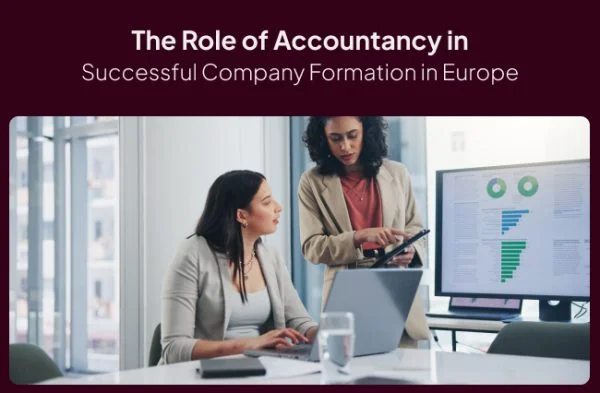
One of the most overlooked but essential elements of setting up a company in Europe is accountancy. Often misunderstood as a back-office necessity, accountancy services are, in fact, the foundation upon which legally compliant, tax-efficient, and scalable businesses are built.
In this article, we explore how accountancy Europe plays a critical role in the European company formation process and why early-stage founders should view their accountants not just as service providers but as strategic partners.
The Critical Link Between Accountancy and Company Formation
Forming a company in Europe is not a plug-and-play experience. Every jurisdiction has its commercial registry, financial reporting laws, and tax obligations. That’s why involving an accountancy service from Day One is essential.
From Paperwork to Compliance
When forming a business, accountants ensure that incorporation documents meet financial disclosure standards, assist in preparing opening balance sheets, and advise on the tax implications of business activities. They liaise with commercial registries and tax offices to ensure that no critical compliance steps are overlooked during the formation process.
For example, accountants can help navigate registration processes through the EU’s Single Digital Gateway, a resource hub that links to national procedures, making cross-border company formation more transparent.
Building the Financial Framework
Accountants play a pivotal role in establishing the financial infrastructure needed for a compliant and operational company. From the outset, they help implement reliable systems for:
- VAT registration and reporting
- Bookkeeping and general ledger structure
- Corporate tax filings
- Bank account setup coordination
These elements are vital not just for legal compliance but also for financial transparency and scalability. Without this framework in place, your company may face difficulties accessing essential services such as invoicing platforms, payment gateways, or even payroll registration. That’s why our accountancy services are integrated into the formation process, ensuring your business is operational from day one. To support this, our post-formation services also provide ongoing financial compliance, reporting, and adjustments as your company grows across jurisdictions.
Country-Specific Requirements Across Europe
One of the primary challenges in forming a European company is the diversity of accounting and tax rules across countries.
Accounting Rules Vary by Jurisdiction
For example:
- In France, businesses follow the Plan Comptable Général, a strict national chart of accounts.
- Germany requires financial statements by the Handelsgesetzbuch (HGB), with audits applicable based on size.
- The Netherlands operates under Dutch GAAP or IFRS, depending on company classification.
While these national standards align with overarching EU regulations, each country enforces its own format, frequency, and documentation. The European Financial Reporting Advisory Group (EFRAG) helps support harmonisation efforts across jurisdictions, but practical differences remain.
Start-up Accounting Obligations
Startups often underestimate the complexity of early obligations, such as:
- Filing annual reports and balance sheets
- Meeting audit thresholds based on staff or turnover
- Submitting monthly VAT returns in high-activity sectors
- Complying with payroll and employee tax declarations
For example, Spain requires electronic invoicing and bookkeeping submissions to tax authorities under its SII system, while Italy mandates real-time VAT reporting through its Sistema di Interscambio (SDI).
For businesses expanding into multiple markets, our European Business Consultancy team provides tailored jurisdictional planning to ensure you meet each country’s accounting requirements from day one.
Choosing the Right Legal Structure with Accountant Support
One of the first and most important decisions entrepreneurs face is selecting the proper legal form for their business. This has long-term implications for taxation, liability, and operational costs.
Common Legal Structures Across Europe
- GmbH (Germany, Austria): Limited liability, requires minimum share capital
- SARL (France, Luxembourg): Common among SMEs, requires accounting transparency
- BV (Netherlands): Flexible for both start-ups and holding structures
- S.r.l. (Italy): Used widely in family-owned or small companies
An accountant can help compare options based on:
- Tax rates and liabilities
- Administrative requirements
- Funding needs and scalability
- Profit distribution and dividend rules
Having this expertise upfront ensures entrepreneurs choose a structure aligned with their business goals and budget.
Ensuring Tax Efficiency and Compliance from the Start
Tax optimization isn’t just for big corporations. It begins at the start-up stage, and accountants play a crucial role in getting it right from the beginning.
Early-Stage Tax Planning
A good accountant will:
- Choose the best tax regime (standard, simplified, or micro-enterprise structures)
- Identify tax credits and deductions (e.g., R&D incentives)
- Plan cash flow with quarterly VAT or CIT payments in mind
Essential Tax Registrations
Every new European company must register for:
- Corporate income tax (CIT)
- VAT (Value Added Tax): if trading above the threshold or cross-border
- Social security: if employing staff
- Payroll tax: for any salaried director or employee
Mistakes or delays in these registrations can prevent a company from trading legally or accessing essential financial systems, such as invoicing and payroll.
Integrating Accountancy into Multi-Jurisdictional Expansion
For companies planning to operate in more than one EU country, the complexity of accounting and tax compliance multiplies.
The Challenge of Cross-Border Operations
Businesses expanding into multiple European countries must manage:
- Different VAT numbers and filing calendars
- Country-specific payroll rules
- Transfer pricing documentation
- Multi-currency accounting and EU intra-statistical reporting (INTRASTAT)
Why a Unified Accountancy Service Matters?
Having separate accountants in each country can lead to inconsistency, miscommunication, and higher costs. A unified provider, like Open a European Company, offers:
- Centralised reporting
- Consistent software and tools
- Dedicated multilingual account managers
- Localised compliance under a single point of contact
The OAEC Approach to Accountancy-Driven Formation
At Open a European Company, we don’t treat accounting as a post-setup task. We integrate accountancy services directly into your European company formation package.
Here’s What We Offer
- Incorporation support tailored to financial requirements
- VAT, corporate tax, and payroll setup
- Monthly bookkeeping and localised reporting
- Statutory compliance and year-end filing
- R&D credit application assistance (where available)
Our services are designed for start-ups, SMEs, and international companies that want to scale into Europe with clarity and control.
Conclusion
In the race to launch or expand a company in Europe, skipping over accountancy can result in delays, penalties, and lost opportunities. Whether it’s choosing the proper legal structure, registering for VAT, managing payroll, or scaling across borders, accountancy is a strategic driver, not just a regulatory box to tick.
By investing in expert accountancy services from the start, you give your business the financial backbone it needs to grow confidently, compliantly, and cost-effectively. Let Open a European Company be your partner in every step of the formation journey with accountancy built in, not bolted on.